






-
Wedding Tools
- Complimentary Planning Assistance
- Destination Wedding Guide Digital Copy
- Elopement Packages
- Marriage License & Legal Essentials
- Checklist
- Welcome Bag Ideas
- Second Lines
- The History of Wedding Umbrellas and More in New Orleans
- Wedding Cake Pulls
- Destination Wedding Guide Printed Copy
- Wedding Inspiration
-
Venues
-
Vendors
-
Pre & Post Wedding
- Wedding Inspiration
- Contact Us
-
Why New Orleans Is Built To Host
- Hotels
-
Meeting & Event Venues
-
Services & Planning Tools
-
Group PR & Marketing Tools
- Convention Calendar
- Testimonials
- Awards
-
Online RFP
- Availability Grid
- Contact Us

Search
You've added your first Trip Builder item! Keep track of your trip itinerary here.
ENews
Menu
-
Things to Do
-
Eat
-
Drink
-
Stay
- Book a New Orleans Hotel
- Hotel Directory
- Bed And Breakfasts: Hotels - New Orleans & Company
-
Places To Stay: New Orleans Hotels - New Orleans & Company
- Saint Charles Avenue Hotels
- Luxury Hotels
- Garden District Hotels
- French Quarter Hotels and Lodging
- Downtown/Central Business District Hotels and Lodging
- Bourbon Street Hotels
- Green Hotels
- Bourbon Street Balcony Hotels - New Orleans & Company
- Haunted Hotels in New Orleans
- Pet-Friendly Hotels
- Historic Hotels
-
Calendar
-
Trip Planning Tools
- Insider's Blog
- LOVENOLA.TV 24/7 Broadcast
-
Weddings
-
Wedding Tools
- Complimentary Planning Assistance
- Destination Wedding Guide Digital Copy
- Elopement Packages
- Marriage License & Legal Essentials
- Checklist
- Welcome Bag Ideas
- Second Lines
- The History of Wedding Umbrellas and More in New Orleans
- Wedding Cake Pulls
- Destination Wedding Guide Printed Copy
- Wedding Inspiration
-
Venues
-
Vendors
-
Pre & Post Wedding
- Wedding Inspiration
- Contact Us
-
Wedding Tools
-
Meeting Planners
-
Why New Orleans Is Built To Host
- Hotels
-
Meeting & Event Venues
-
Services & Planning Tools
-
Group PR & Marketing Tools
- Convention Calendar
- Testimonials
- Awards
-
Online RFP
- Availability Grid
- Contact Us
-
Why New Orleans Is Built To Host
-
Groups
-
Travel Professionals
-
Membership
-
Press and Media
- Community
Booking
>
x
The History of African American Culture in New Orleans
The bedrock of New Orleans life, from its jazz to its cuisine, is built on the African-American experience, a heritage both proud and tragic
The African American community has played an intrinsic role in creating New Orleans, structurally, economically, and culturally.
Background
People of African ancestry first arrived at New Orleans in 1719, within a year of the establishment of the city, having been forcibly removed from the Senegambia region of West Africa. Roughly five thousand Africans survived the Middle Passage en route to French Louisiana during the 1720s, followed in the 1780s by a similarly sized group brought by the Spanish from the Benin and Congo regions. Enslaved Africans of the colonial era cleared forests, raised crops, and built the city infrastructure.

Rebecca Todd
Sunday Second Line
Spanish policies on slavery opened opportunities for manumission—the ability for slaves to attain freedom—which gave rise to a substantial population of gens de couleur libres (free people of color). By the time of the Louisiana Purchase in 1803, New Orleans was home to 2,773 enslaved people of African ancestry and 1,335 free people of color; together, they made up 51 percent of the city’s total population of 8,056 people.
Some black New Orleanians were born in African and spoke their native languages; others were born locally (black Creoles) and spoke French or French Creole; later, others would arrive from the upper South, victims of the domestic slave trade, and were English-speakers.
By 1860, the city’s population of people of African ancestry had grown to 14,484 enslaved and 10,939 free people of color, out of a total of 174,491 people.
Old and New Traditions
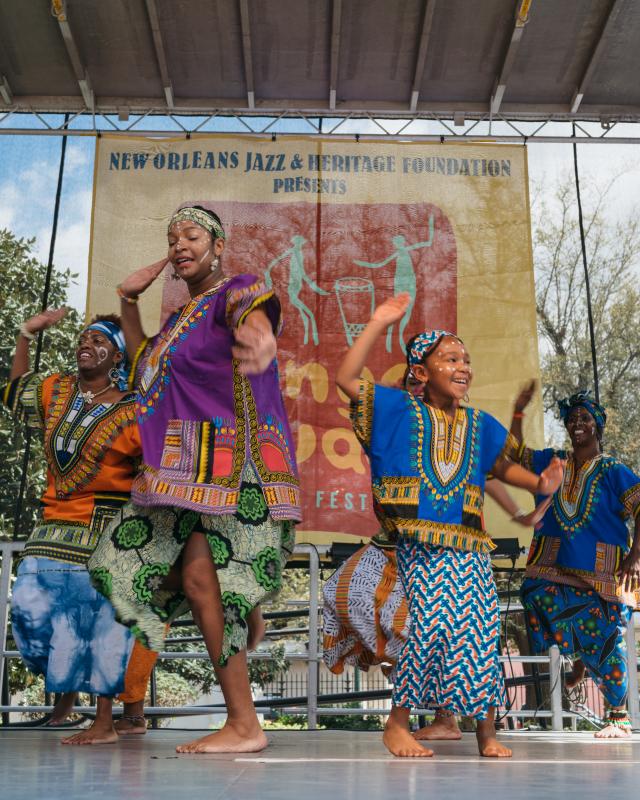
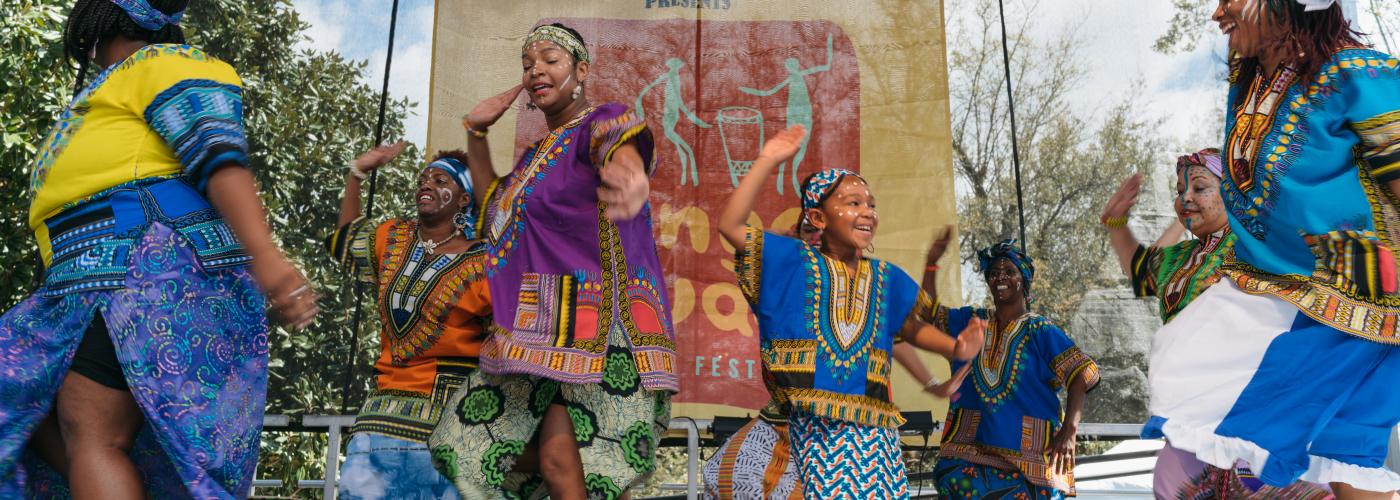
Instead of disappearing or homogenizing, some aspects of African culture persisted in New Orleans, influencing everything from food to music to religion. One vital place for this cultural continuity was Congo Square, now part of Armstrong Park on the edge of the French Quarter in the Faubourg Treme. Here on Sunday off-days, hundreds of African slaves and laborers congregated to trade goods, play music, dance, and socialize. Observers documented African musical instruments and dances performed at Congo Square, and musicologists and cultural historians universally agree that this space ranks among the most important historical sites in the nation for understanding American music, and the key role that African Americans in New Orleans played in its development and diversification.
Of all the African-American contributions to American culture, music tops the list. The Crescent City is the birthplace of jazz, which, from its emergence in back-of-town New Orleans neighborhoods in the late 1800s, became the most popular musical genre of most of the Western world well within two generations. New Orleans African-American musicians have been also leaders in creating a distinctive rhythm & blues style that helped birth rock ’n’ roll, in gospel and funk, and in rap, hip hop, bounce and brass band. New Orleans remains famous for its vibrant music scene rooted in its musical legacy, a legacy that is African-American at its core.
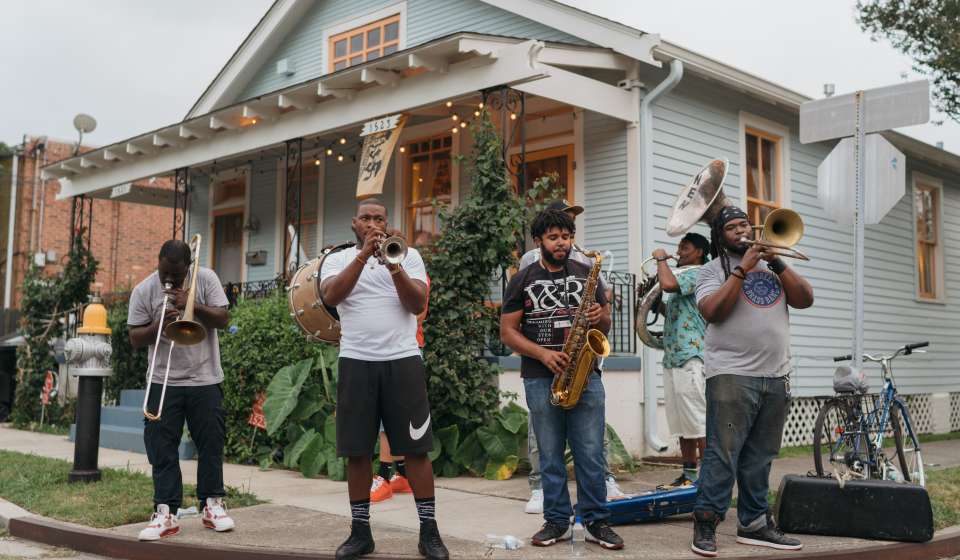

Paul Broussard
Brass Band at Sauvage and Ponce de Leon - Jazz Fest After Parties
African Influence in Mardi Gras
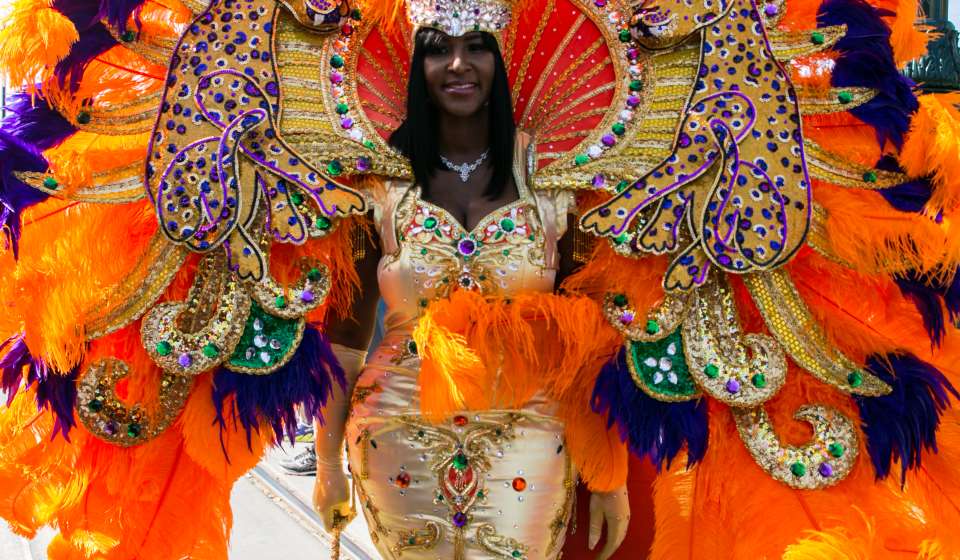
Many beloved Mardi Gras traditions are African-American, including the “skull gangs” that roam early on Fat Tuesday morning, the street party “under the bridge on North Claiborne Avenue in the Faubourg Treme later that afternoon, the famed Mardi Gras Indians, and the Krewe of Zulu parade, which rolls on Mardi Gras morning. Zulu grew out of social aid and pleasure clubs—that is, benevolent societies providing insurance for illness or funerals, which would hold street parades (“second lines”) for members to advertise the club. Today, century-old Zulu krewe boasts over 1,500 riders, among them leaders in business, government, and community, and Second Lines occur somewhere in the city on practically any given Sunday.
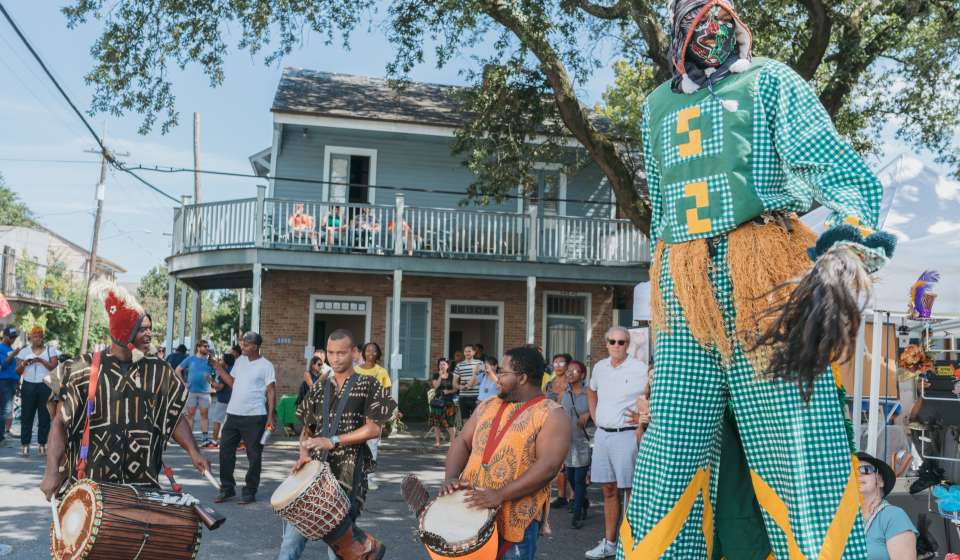

Paul Broussard
Zulu Connection - Treme Fall Fest
Points of Interest
In addition to beautiful Armstrong Park and Congo Square, you can visit the African American Museum at 1418 Governor Nicholls Street in the Faubourg Treme, among the oldest black neighborhoods in the nation; the Le Musee de f.p.c. at 2336 Esplanade Avenue, commemorating the gens de couleur libres; and the Backstreet Cultural Museum (1116 Henriette Delille Street) and House of Dance & Feathers (1317 Tupelo Street) for insights into Mardi Gras Indians, Second Lines, jazz funerals—all found only in New Orleans.
For additional learning, consider download the Slave Trade App, which provides in-depth detail about sites throughout the city that played a significant role in the slave trade in New Orleans. Furthermore, we recommend blocking time to visit the Whitney Plantation, one of the only historic house museums devoted entirely to the experiences of enslaved Africans.
© 2024 Neworleans.com All Rights Reserved.

 FREE E-NEWSLETTER