







-
Wedding Tools
- Complimentary Planning Assistance
- Destination Wedding Guide Digital Copy
- Elopement Packages
- Marriage License & Legal Essentials
- Checklist
- Welcome Bag Ideas
- Second Lines
- The History of Wedding Umbrellas and More in New Orleans
- Wedding Cake Pulls
- Destination Wedding Guide Printed Copy
- Wedding Inspiration
-
Venues
-
Vendors
-
Pre & Post Wedding
- Wedding Inspiration
- Contact Us
-
Why New Orleans Is Built To Host
- Hotels
-
Meeting & Event Venues
-
Services & Planning Tools
-
Group PR & Marketing Tools
- Convention Calendar
- Testimonials
- Awards
-
Online RFP
- Availability Grid
- Contact Us

Search
You've added your first Trip Builder item! Keep track of your trip itinerary here.
ENews
Menu
-
Things to Do
-
Eat
-
Drink
-
Stay
- Book a New Orleans Hotel
- Hotel Directory
- Bed And Breakfasts: Hotels - New Orleans & Company
-
Places To Stay: New Orleans Hotels - New Orleans & Company
- Saint Charles Avenue Hotels
- Luxury Hotels
- Garden District Hotels
- French Quarter Hotels and Lodging
- Downtown/Central Business District Hotels and Lodging
- Bourbon Street Hotels
- Green Hotels
- Bourbon Street Balcony Hotels - New Orleans & Company
- Haunted Hotels in New Orleans
- Pet-Friendly Hotels
- Historic Hotels
-
Calendar
-
Trip Planning Tools
- Insider's Blog
- LOVENOLA.TV 24/7 Broadcast
-
Weddings
-
Wedding Tools
- Complimentary Planning Assistance
- Destination Wedding Guide Digital Copy
- Elopement Packages
- Marriage License & Legal Essentials
- Checklist
- Welcome Bag Ideas
- Second Lines
- The History of Wedding Umbrellas and More in New Orleans
- Wedding Cake Pulls
- Destination Wedding Guide Printed Copy
- Wedding Inspiration
-
Venues
-
Vendors
-
Pre & Post Wedding
- Wedding Inspiration
- Contact Us
-
Wedding Tools
-
Meeting Planners
-
Why New Orleans Is Built To Host
- Hotels
-
Meeting & Event Venues
-
Services & Planning Tools
-
Group PR & Marketing Tools
- Convention Calendar
- Testimonials
- Awards
-
Online RFP
- Availability Grid
- Contact Us
-
Why New Orleans Is Built To Host
-
Groups
-
Travel Professionals
-
Membership
-
Press and Media
- Community
Booking
>
x
Mardi Gras (Black Masking) Indians
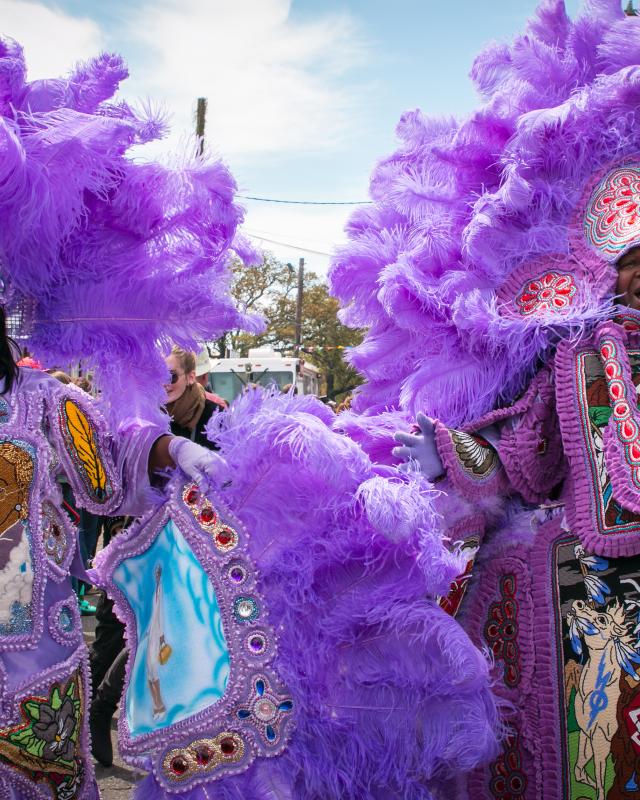
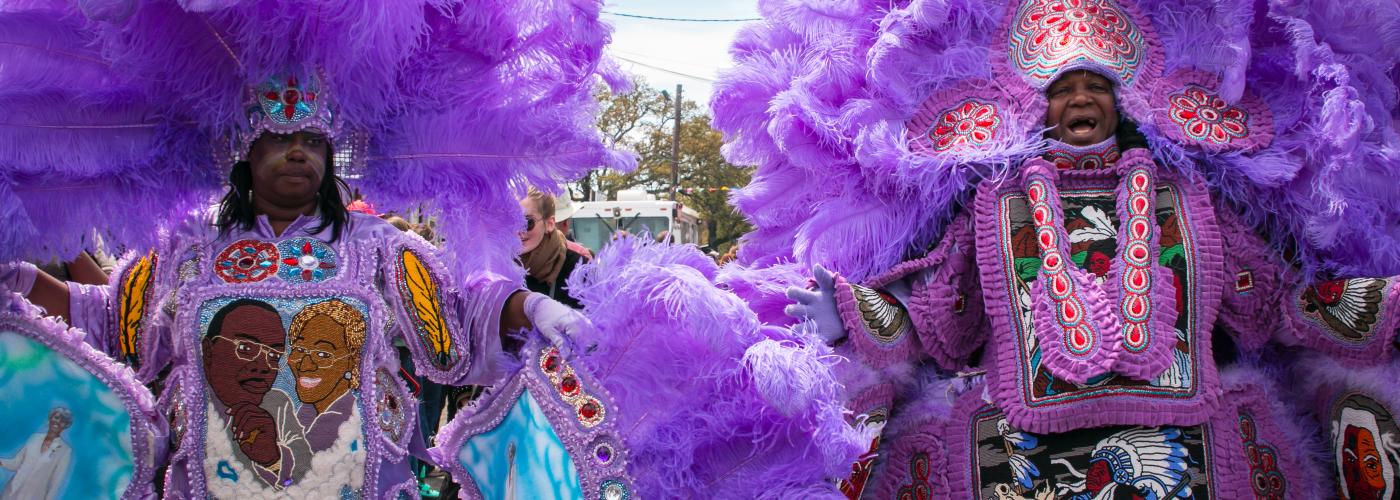
Intricately beaded suits, lively footwork and rhythmic music fill the streets of New Orleans when Mardi Gras Indians (aka Black Masking Indians) "mask" in neighborhoods throughout the city
Who are New Orleans Mardi Gras Indians?
One of the most mysterious, fascinating, and colorful pieces of New Orleans’ cultural quilt belongs to Mardi Gras Indians, also referred to as Black Masking Indians. A unique and historic subculture of New Orleans, Black Masking Indians and their traditions date back to the 1800s when Native Americans provided safe refuge and a sense of community for runaway slaves. Black Masking Indian culture is influenced by both ancestral enslaved Africans and the friendship forged with Native Americans.

New Orleans & Company
Black Masking Indians: A historical New Orleans Carnival tradition
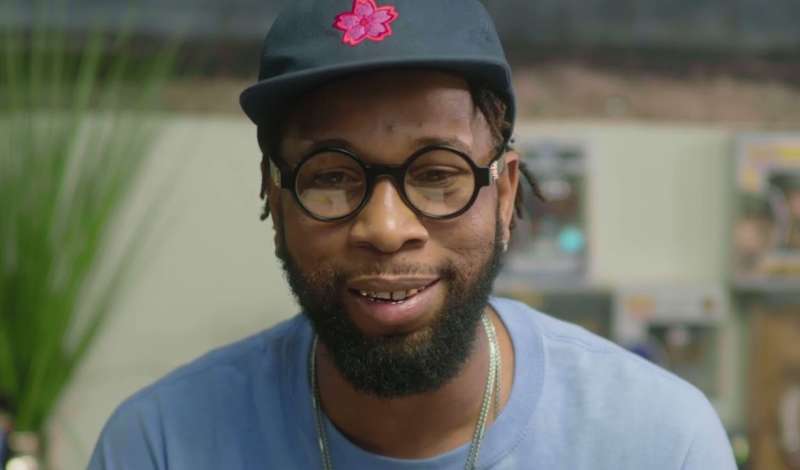
Demond Melancon, Artist | "In New Orleans, we get down with our culture"
When African Americans were later banned from mainstream Mardi Gras Krewes, they created their own celebration known as Carnival in their own neighborhoods. Delayed but not deterred, various communities of eager paraders took to their respective neighborhoods and began celebrating on their own. These various communities would continue on to make up their own tribes of Mardi Gras Indians for decades.
How many tribes are there?
Both hierarchical and territorial, there are over 40 Black Masking Indian tribes throughout the city of New Orleans, including the Wild Magnolias, the Young Maasai Hunters, the Wild Tchoupitoulas, Bayou Renegades, and the Golden Feather Hunters. Each tribe has positions among its members such as Big Chief, Big Queen, Spy Boy, and Flag Boy. Each position holds an individual responsibility in the tribe.

Pableaux Johnson
Mardi Gras Indians
Mardi Gras Indian Suits
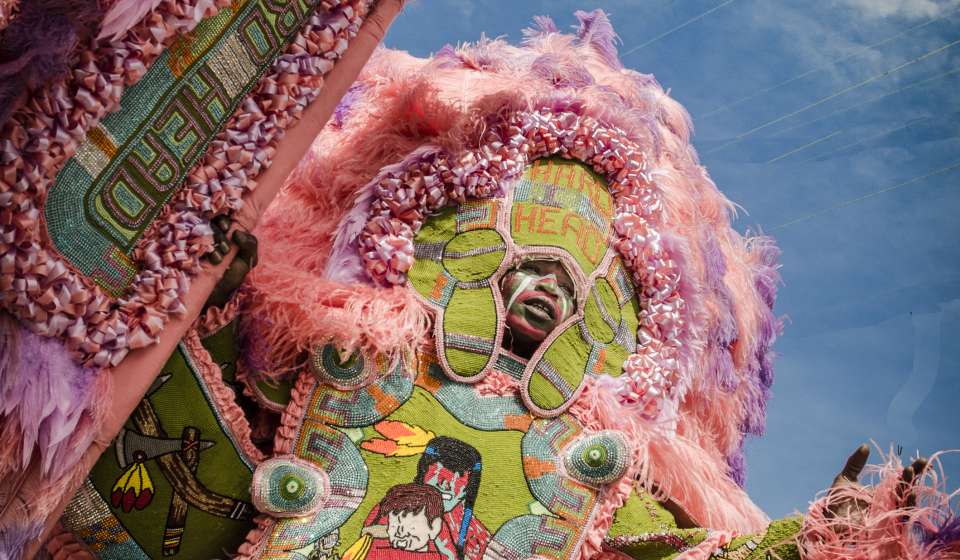
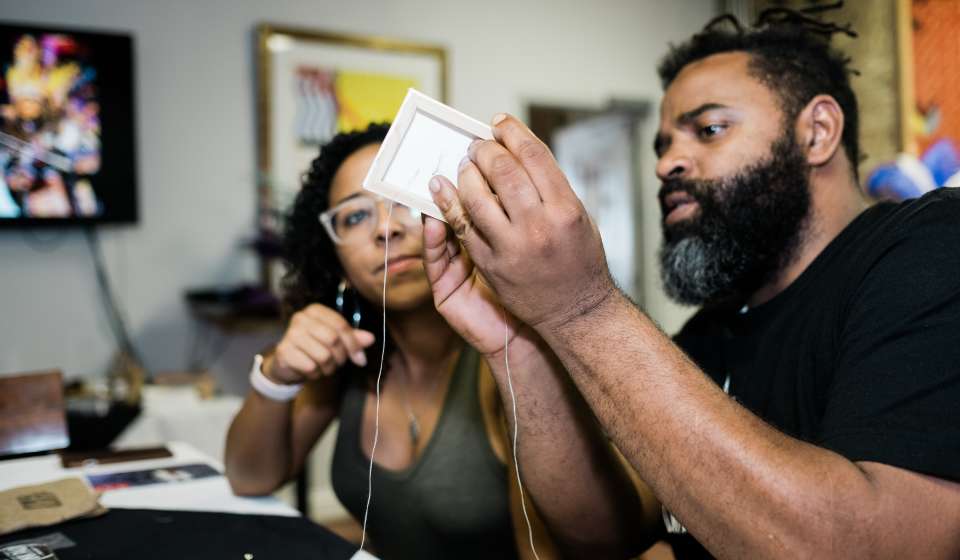
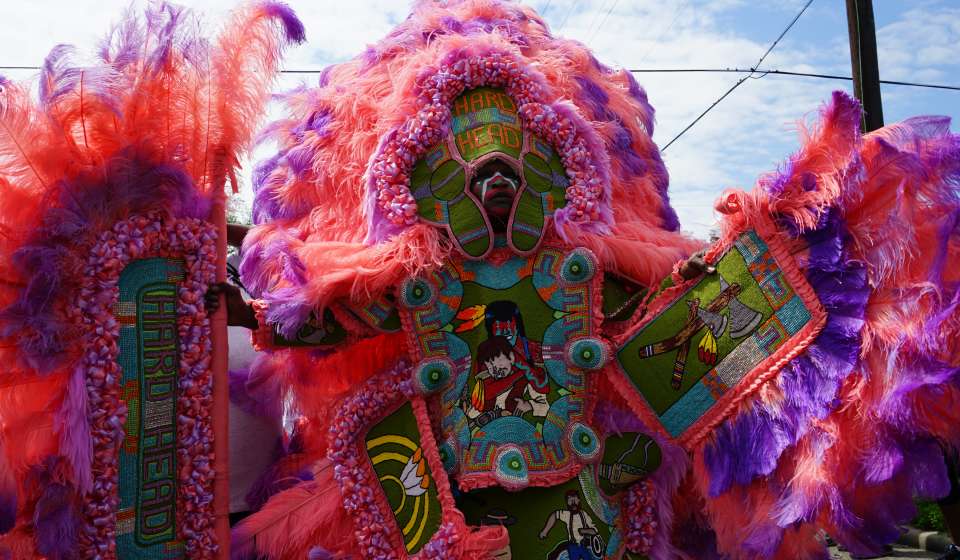
Stretching from Uptown to downtown and the West Bank, each tribe has its own customs, traditions, history, and, of course, style. Their hand-sewn creations feature intricate beadwork and dramatic images and rank among the nation's best folk art. These suits take an entire year to create and can cost thousands of dollars depending on the member’s position in the tribe and craftsmanship. With hundreds of thousands of beads, brightly dyed ostrich plumes, sequins, velvet, and rhinestones sewn on by hand, some end up weighing as much as 150 pounds. Mardi Gras Indian suits are truly a labor of love and tradition.

Justen Williams, NOTMC
Learning to hand-bead with the Young Maasai Hunters at Mardi Gras Indians Sip and Sew
Just as other elements vary by tribe, suits are no exception. Uptown Indians tend to use more rhinestones and feathers, and are known for flat beaded designs, pulling from more Native American influences, whereas Downtown Indians often build three-dimensional structures as part of their designs, and use sequins and feathers inspired from more African Influences.
Mardi Gras Indian Music
Music, typically call-and-response chanting with tambourines and other handheld percussion plays a central role in the Mardi Gras Indian masking (when the tribes take to the streets). With their formal hierarchy, the Indians grace the streets of New Orleans’ neighborhoods in friendly competition over which suits are the “prettiest.” The famous New Orleans tune “Iko Iko” with the lyrics, “My flag boy and your flag boy, sitting by the fire,” is rooted in Mardi Gras Indian tradition as is the New Orleans standard “Hey Pocky Way.”

Paul Broussard, NOTMC
Super Sunday in New Orleans
Where can you see Mardi Gras Indians?
There are several Super Sundays throughout the year, and the date is different for each: Uptown, downtown (Bayou St. John), and West Bank (Algiers). Each Super Sunday is held in the spring, starting with Uptown Super Sunday typically on the third Sunday of March (or the Sunday closest to St. Joseph’s Day). You can also spot Mardi Gras Indians on Fat Tuesday and St. Joseph's Day. You might even catch a tribe or two performing at the New Orleans Jazz & Heritage Festival.
If you can’t make any of these beloved events or celebrations, during any given day of the year you can visit The Backstreet Cultural Museum or the House of Dance and Feathers to learn more about the unique and deep history of Mardi Gras Indians.
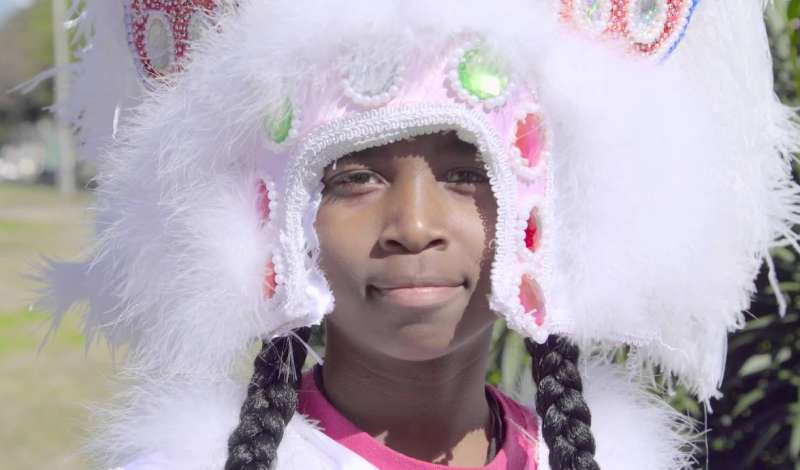
Making Mardi Gras: Masking Indian with the Red Flame Hunters
© 2024 Neworleans.com All Rights Reserved.

 FREE E-NEWSLETTER